
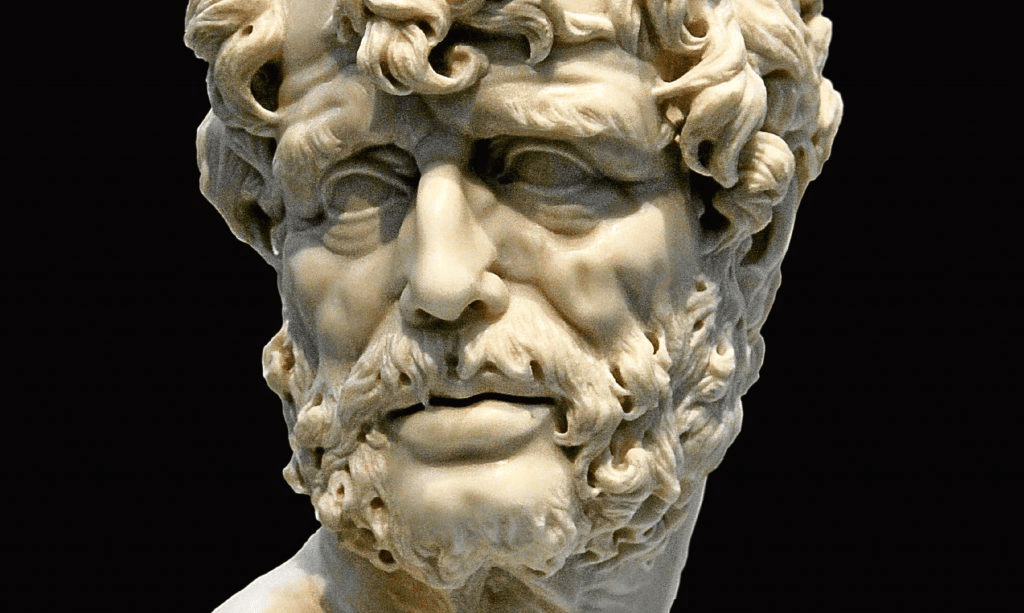
Bad things can and do happen to all of us. This is a fact of life I’ve come to learn all to well. It can be overwhelming without being ready for it. Seneca tells us, “What I advise you to do is not be unhappy before the crisis comes”. He’s telling us to be ready for whatever may be in our path, our fate so to speak. Going through life with an “it is what it is” mindset can be a positive attribute.
My first post mentioned this would be along the lines of a personal journey, so there will be some stories relating to these travels in Stoicism. I tend to have a temper. People know this, have seen this. When coming across Stoicism it made me realize there are much better ways of handling adversity. We can only control how we respond, not the event that has already taken place. Living in the past hinders our living to our fullest. What transpired to test me? On my way to work, my engine decided to go out in a bang. I found myself stranded on the side of a major highway before the sun brought life to a new day.
You need to prepare yourself for these types of events. I could have yelled, screamed, kicked the car damaging me more than the smoking engine. What would this have done for me? Not a thing. Kicking a washing machine may get it going for a short time more or rocking a vending machine to get that soda (or pop, or coke depending on your habitat); however it was definitely not going to fill in the hole in the back of my engine block. I walked around the car and observed the oil on the back and the smoke billowing from the hood. “Well that just happened” is all I said to myself. Nothing I could do. Studying Stoicism prepared me for this event. Seneca advises us that “if you would have not a man flinch when the crisis came, train him before it comes.” I didn’t flinch. We should do our best to not flinch. It is not an easy non-response.
Epictetus puts a lot of focus on the aspect of control. He wrote for us to remember that the more we value the things outside our control, the less control we have. We will react in anger and frustration and display reactions that don’t reflect our values or the Stoic virtues. We need to be prepared to handle those things outside our control so those watching us (our kids, partners, co-workers, employees) see us handle adversity calmly; therefore following our lead and handling challenges in a cool headed manner.
I intend to write more often and publish for two reasons. One is selfish, and this is for my own growth as human and a writer. The second is if this helps just one person who may need to hear it. We all struggle with adversity. How are we going to react? How are those around us going to see us react? I’ll leave this week with another thought from Seneca.
“We suffer more in imagination than in reality.”
Switch the focus to what you can control.
 Home
Home 
Leave a comment